
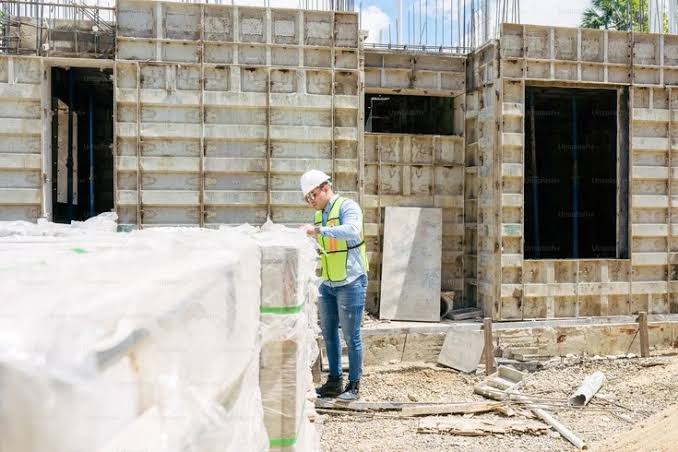
PPN KMS vs. Hiring a Construction Contractor in Indonesia (2026): Which Option Is More Tax-Efficient?
If your business plans to build an office, warehouse, restaurant, or operational villa in Indonesia, the biggest tax decision is made before the first brick is laid: manage the build yourself with a local foreman, or appoint a registered construction company. The PPN KMS vs hiring a construction contractor question determines how much VAT you pay, whether you can recover it, and how well the cost is documented. The short answer: self-building often looks cheaper on paper, but the best choice depends on your VAT status, the size of the building, and the total cost, not on tax rates alone.
The Dilemma: Self-Build or Registered Contractor?
A business has two routes. The first is to run construction directly, buying materials and paying a local foreman (mandor) and daily workers. The second is to sign a contract with a formal construction company that invoices for the work.
The two routes create a cost-versus-tax paradox. Self-building feels cheaper because the construction budget is lower at the start, but it triggers PPN KMS (a special VAT on self-build activity) that the owner must calculate and pay. A contractor looks more expensive, but it brings tax certainty, a formal contract, and withholding tax certificates (bukti potong) that keep the paperwork clean.
What Is PPN KMS (VAT on Self-Build Activity)?
PPN (Pajak Pertambahan Nilai / Value Added Tax) applies to Kegiatan Membangun Sendiri (KMS), meaning the activity of building a new structure or extending an existing one without a construction company that charges VAT. The tax is calculated, paid, and reported by the person or company doing the building.
Legal basis and scope
Legal basis: PPN KMS is governed by PMK No. 81 Tahun 2024 (Articles 323–328, as amended), which took over from PMK No. 61/PMK.03/2022 when Coretax started in January 2025. PMK No. 11 Tahun 2025 (Article 20) later amended the rate calculation.
Minimum size: PPN KMS generally applies to qualifying buildings with a total floor area of at least 200 m², subject to the construction criteria below.
Type of building: a permanent structure made mainly of concrete, brick, timber, steel, or similar material, used as a residence or a place of business.
Local foremen and non-PKP contractors: building work done by a third party that does not charge PPN is also treated as KMS. The owner may be released from paying PPN KMS if it provides true information on that builder (at minimum identity and full address), so the result depends on the facts and should be confirmed before construction starts.
Source: PMK No. 81 Tahun 2024, Pasal 323–328; PMK No. 11 Tahun 2025, Pasal 20; PMK No. 61/PMK.03/2022 (replaced); DJP — pajak.go.id
How PPN KMS is calculated
PPN KMS is a fixed-portion VAT. The effective rate is 2.2% of qualifying construction costs, excluding land acquisition costs, calculated as 20% × 12% × 11/12 after PMK 11/2025. The tax base is the cost incurred and/or paid in each tax period until the building is completed, so PPN KMS is paid periodically during construction, not only at the end. The 2.4% figure that circulated early in 2025 no longer applies.
Example: A PT PMA builds a 400 m² restaurant. Qualifying construction cost (materials, labor, equipment rental), excluding land, is IDR 2,000,000,000. PPN KMS = 2.2% × IDR 2,000,000,000 = IDR 44,000,000, paid month by month as the costs are incurred. |
Source: PMK No. 81 Tahun 2024, Pasal 324 as amended by PMK No. 11 Tahun 2025, Pasal 20; DJP — pajak.go.id
Key characteristics and risks
Input VAT on purchases is not creditable. VAT you pay on building materials and services bought for the project cannot be credited. It becomes part of your construction cost.
The KMS payment itself can be credited by a PKP. A Pengusaha Kena Pajak (PKP, a VAT-registered business) may credit the PPN KMS it paid, provided the general VAT credit rules are met. A non-PKP cannot benefit from this.
Self-payment deadline: PPN KMS must be paid by the 15th of the month following the tax period in which the costs were incurred, using a billing code generated in Coretax (the DJP digital tax platform).
Reporting: a PKP reports the payment in its monthly VAT return (SPT Masa PPN). A non-PKP is treated as having reported once the payment is made.
Audit exposure: DJP receives data from government agencies and third parties, so a large build with no KMS payment can be noticed. (Note: general practice as of 2026; verify at pajak.go.id)
Source: PMK No. 81 Tahun 2024, Pasal 326–328 and the KMS input-tax provisions; UU No. 28 Tahun 2007 tentang KUP, Pasal 35A; DJP — pajak.go.id
How Tax Works When You Use a Registered Contractor
When a registered construction company does the work, two separate taxes apply: the contractor’s income tax (a final PPh withheld by you) and VAT charged on the invoice.
PPh Final on construction services
PPh (Pajak Penghasilan / Income Tax) Article 4(2) is a final tax, meaning it settles the contractor’s income tax on that income. It is calculated on the contract value excluding VAT. It is generally withheld by the service user when that user is a designated withholding party under the tax regulations, such as a domestic company. If the service user is not required to withhold, the construction provider pays it directly. Either way it is the provider’s tax, not an extra charge on top of the contract price.
Contractor type (construction works) | PPh Final rate | Applies to |
|---|---|---|
Small-qualification business certificate (SBU) or individual competence certificate (SKK) | 1.75% | Contract value excl. VAT |
Medium, large, or specialist qualification | 2.65% | Contract value excl. VAT |
No SBU or SKK | 4% | Contract value excl. VAT |
SBU (Sertifikat Badan Usaha) is a company’s construction business certificate. These rates apply to construction works only. Integrated construction (design and build) is taxed at 2.65% with a certificate and 4% without. Design and supervision services are taxed at 3.5% with a certificate and 6% without.
Source: PP No. 9 Tahun 2022 (amending PP No. 51 Tahun 2008), Pasal 3; UU No. 36 Tahun 2008 tentang PPh, Pasal 4 ayat (2); DJP — pajak.go.id. (Note: PP 9/2022 Pasal 10D provides for a government evaluation of the final-tax regime; no change to these rates had been announced at the time of writing. Verify at pajak.go.id.)
VAT charged by the contractor
A contractor that is a PKP charges VAT on its invoice. The statutory rate is 12%, applied to a tax base of 11/12 of the contract value for non-luxury services, so the effective VAT is 11% of the contract value. If your business is itself a PKP, this VAT appears on a tax invoice (Faktur Pajak) and can be credited against the VAT you collect if the general credit rules are met. Because the contractor charges VAT, no PPN KMS arises.
Source: PMK No. 131/PMK.03/2024, Pasal 3; UU No. 8 Tahun 1983 tentang PPN (as amended by UU HPP), Pasal 9; DJP — pajak.go.id
PPN KMS vs Hiring a Contractor: Head-to-Head Comparison
Indicator | PPN KMS (self-build / foreman) | Registered PKP contractor |
|---|---|---|
Building size | Generally 200 m² or more: PPN KMS applies. Below 200 m²: it does not. | Any size. |
Main tax cost | 2.2% of qualifying construction costs, excluding land. PPh Final applies only on payments to a construction business. | Effective VAT 11% of contract value. PPh Final of 1.75%–4% is withheld from the contractor’s payment. |
VAT credit if you are a PKP | The PPN KMS payment can be credited. VAT on materials and services you buy directly cannot be credited. | VAT on the contractor’s Faktur Pajak can be credited. |
Administration | Monthly self-calculation, payment by the 15th, and reporting in SPT Masa PPN (PKP). | Receive Faktur Pajak, withhold PPh Final, issue withholding certificates. |
Documentation and audit risk | Cost records are self-prepared and must be complete and accurate. | Contract, invoices, and tax documents come from a formal supplier. This helps, but does not remove audit risk. |
Source: PMK No. 81 Tahun 2024, Pasal 323–328; PMK No. 131/PMK.03/2024; PP No. 9 Tahun 2022; DJP — pajak.go.id
Illustration: IDR 2 billion project, VAT only
Scenario | Self-build (PPN KMS) | Registered contractor |
|---|---|---|
Business is not a PKP | IDR 44,000,000 PPN KMS, plus VAT on materials: all a cost | IDR 220,000,000 VAT: a cost |
Business is a PKP | IDR 44,000,000 PPN KMS can be credited if rules are met; VAT on materials stays a cost | IDR 220,000,000 VAT can be credited if rules are met |
Illustration only, using the same IDR 2,000,000,000 value for both routes. Contractor prices include margin and supplier costs, and PPh Final is withheld from the contractor’s payment, so compare real quotes before deciding.
Decision Guide: When to Choose Each Route
PPN KMS (self-build) may fit better if:
The building is below 200 m², so no PPN KMS applies at all.
Your business is not yet a PKP, so VAT charged by a contractor could not be credited anyway and would be a pure cost.
A registered contractor may fit better if:
Your business is already a PKP, so the VAT on the contractor’s invoice can be offset against the VAT you collect.
The project is larger than 200 m² and needs a fixed schedule, a structural warranty, and a formal contract and invoices.
You want to reduce audit risk, because the construction cost is supported by official contractor documents.
Two checks before you decide. First, hiring a foreman or a non-PKP contractor does not automatically avoid PPN KMS; the outcome depends on whether the exemption conditions are met. Second, VAT credit is never automatic. It depends on the general credit rules in Article 9 of the VAT Law, including a direct link between the building and your taxable business activity. Confirm this with your tax advisor before relying on it. |
Source: PMK No. 81 Tahun 2024, Pasal 323 and 327; UU No. 8 Tahun 1983 tentang PPN (as amended by UU HPP), Pasal 9 ayat (8); DJP — pajak.go.id
How GMS Agency Can Help
Choosing between self-building and a registered contractor takes more than comparing tax rates. Your VAT status, construction costs, contractor arrangements, and eligibility for input VAT credit all affect the final cost. GMS Agency’s Tax & Accounting team can assess both options for your project, review your construction documentation, and identify the tax obligations that apply before construction begins.
GMS Agency also provides bookkeeping, PPN and PPh filings, Coretax assistance, and annual corporate tax returns, all in plain English. Contact GMS for a quote.
Frequently Asked Questions
Do I pay PPN KMS if my building is under 200 m²?
PPN KMS generally applies to qualifying buildings of at least 200 m², subject to the construction criteria in PMK 81/2024. Works carried out in stages may be treated as one project when the gap between stages is no more than two years. (Source: PMK No. 81 Tahun 2024, Pasal 323)
Does hiring a local foreman or a non-PKP contractor avoid PPN KMS?
Not automatically. Work by a party that does not charge VAT is treated as KMS, but the owner can be released from paying if it provides true information on that builder, at minimum identity and full address. Verify the facts of your project before relying on this. (Source: PMK No. 81 Tahun 2024, Pasal 323 ayat (7) and (9); DJP — pajak.go.id)
What is the PPN KMS rate in 2026?
The effective rate is 2.2% of qualifying construction costs, excluding land acquisition costs. It is calculated as 20% × 12% × 11/12, a formula that PMK 11/2025 applied retroactively from 1 January 2025. (Source: PMK No. 11 Tahun 2025, Pasal 20; PMK No. 81 Tahun 2024, Pasal 324)
Can my PT PMA credit the VAT on a self-build project?
A PT PMA that is a PKP can credit the PPN KMS it paid if the general VAT credit rules are met. VAT on materials and services bought for the project cannot be credited. (Source: PMK No. 81 Tahun 2024, Pasal 327; UU PPN, Pasal 9)
Who withholds the PPh Final on a construction contract, and at what rate?
A domestic company that uses the construction service withholds it from the payment, based on the contract value excluding VAT. The rate is 1.75%, 2.65%, or 4% for construction works, depending on the contractor’s certificate and qualification. (Source: PP No. 9 Tahun 2022, Pasal 3; DJP — pajak.go.id)
Sources: PMK No. 81 Tahun 2024 (as amended, including PMK No. 54 Tahun 2025 and PMK No. 1 Tahun 2026) · PMK No. 11 Tahun 2025 (as amended by PMK No. 53 Tahun 2025) · PMK No. 61/PMK.03/2022 (replaced) · PMK No. 131/PMK.03/2024 · PP No. 9 Tahun 2022 · UU No. 8 Tahun 1983 tentang PPN (as amended by UU No. 7 Tahun 2021 / UU HPP) · UU No. 36 Tahun 2008 tentang PPh · UU No. 28 Tahun 2007 tentang KUP · DJP — pajak.go.id. This guide reflects Indonesian tax regulations as of October 2026. Always verify current requirements at pajak.go.id.
Not sure which route is cheaper for your project? GMS Agency’s Tax & Accounting team compares PPN KMS and contractor tax for your business before you build, in plain English, no jargon. → Book a Free Tax Health Check — gms-indonesia.co (no obligation, no jargon) |
Leave a Reply